
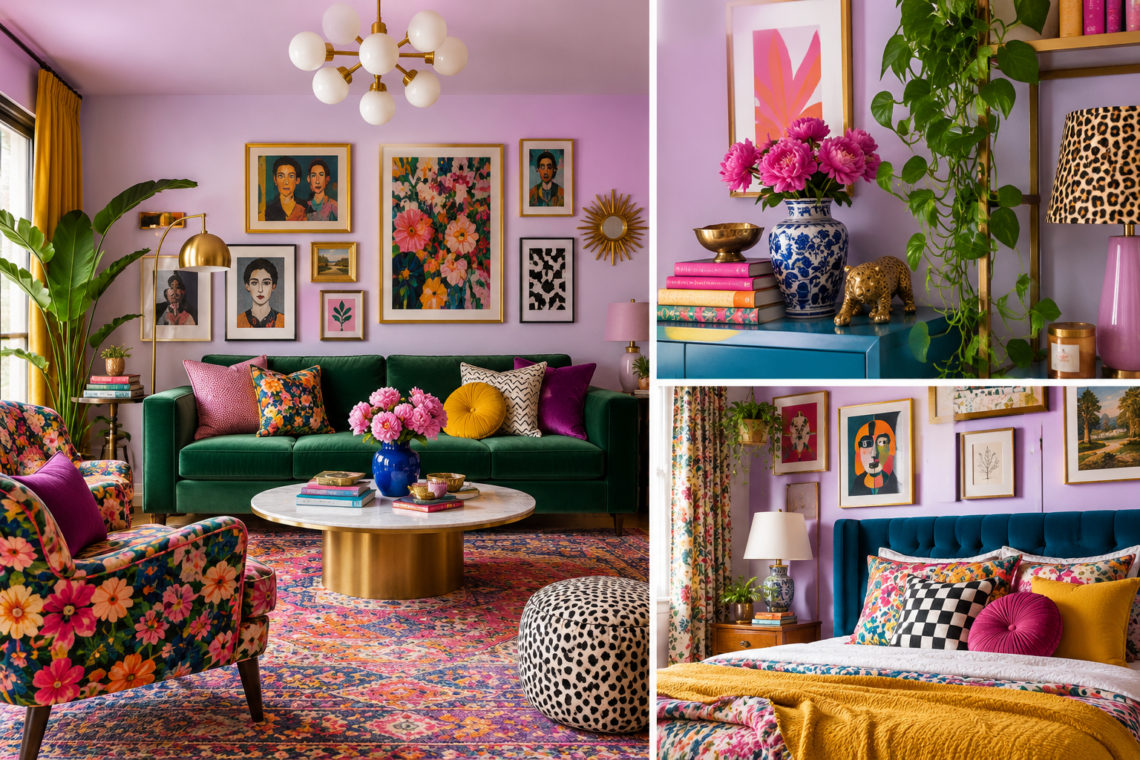
Picture walking into a living room with jewel-toned velvet couches, a gallery wall stacked floor to ceiling, patterned rugs layered under a bold chandelier, and shelves packed with books, plants, and travel souvenirs. Nothing matches on paper, yet somehow it all works together. That room isn’t cluttered. It’s confident.
If you’ve spent years hearing that a good home needs empty walls and neutral palettes, this style might feel like a rebellion. And honestly, it kind of is. So what is maximalist interior design, really, and why are so many homeowners trading their beige sofas for bold prints? Let’s break it down in plain, simple terms.
What Is Maximalist Interior Design?
Maximalist interior design is a style built on abundance. It layers color, pattern, texture, and personal objects in a way that feels rich and intentional rather than random. Where minimalism strips a room down to essentials, this design approach does the opposite: it fills a space with items that tell a story about the people who live there.
The goal isn’t just “more stuff.” A well-done maximalist room uses a clear point of view so every piece, from the artwork to the throw pillows, earns its place in the space. Think of it as curated abundance rather than clutter.
Homeowners often turn to maximalist interior design when a plain, neutral room starts to feel cold or forgettable. It gives a space energy, warmth, and a strong sense of identity the moment you walk in. Instead of hiding personality behind matching furniture sets, this style puts it right on display, from an inherited armchair to a shelf of paperback novels collected over a decade.
Some people also describe maximalism as the “more is more” answer to years of minimalist trends that felt sparse and impersonal. It welcomes color mixing, pattern layering, and a home filled with meaning instead of a home built purely around visual restraint.
The Roots of Maximalist Interior Design
Maximalism isn’t a brand-new trend. Its roots stretch back centuries, showing up in Victorian parlors packed with patterned wallpaper, ornate furniture, and heavy drapery. Wealthy households in that era treated a full, decorated room as a sign of taste and status, and nearly every surface carried some kind of pattern or ornament.
Later, the 1970s brought a bold mix of disco glam, rich jewel tones, and eclectic global influences into everyday homes. Shag rugs, bold wallpaper, and mixed patterns became a way for people to express personality after decades of more formal, restrained decorating.
The style faded during the minimalist wave of the 2000s and 2010s, when open, empty spaces dominated design magazines and social media feeds. Clean lines, white walls, and sparse furniture became the look everyone wanted to copy. But many homeowners grew tired of rooms that felt more like showrooms than homes people actually lived in. Somewhere around the late 2010s, maximalism made its comeback, and it hasn’t slowed down since.
Today’s version borrows from that colorful history while adding a modern twist: better craftsmanship, sustainable materials, and a stronger emphasis on personal storytelling through objects collected over time rather than purchased all at once.
Core Elements of Maximalist Decor
Good maximalist decor isn’t thrown together at random. A few key building blocks make it feel put-together rather than overwhelming.
- Bold color palettes: Deep jewel tones, rich earth colors, or unexpected combinations like burgundy and emerald.
- Layered patterns: Florals, stripes, animal prints, and geometric shapes mixed in one space.
- Statement furniture: Oversized sofas, carved wood pieces, or vintage finds with personality.
- Gallery walls: Art, photos, and mirrors grouped together instead of spread thin.
- Collected objects: Books, plants, souvenirs, and heirlooms displayed as part of the design, not hidden away.
- Rich textures: Velvet, brass, rattan, and marble layered side by side.
Each item plays a role. Remove the color or the layering, and the whole feel of the room shifts back toward something plainer. Many people find that the fastest way to spot good maximalism is to look at how the pieces relate to each other. A green velvet sofa, a brass floor lamp, and a striped rug can look chaotic apart, but grouped in one room with a shared warm undertone, they suddenly read as one cohesive story.
Maximalism vs Minimalism: What’s the Real Difference?
People often ask how maximalism stacks up against minimalism, since the two sit at opposite ends of the design spectrum. Here’s a quick side-by-side look.
| Feature | Maximalist Style | Minimalist Style |
| Color palette | Bold, saturated, mixed tones | Neutral, muted, monochrome |
| Pattern use | Multiple patterns layered together | Little or no pattern |
| Furniture | Statement pieces, varied styles | Simple, clean lines, few pieces |
| Wall decor | Gallery walls, full displays | Sparse, often a single focal piece |
| Overall feel | Rich, warm, personal, energetic | Calm, open, streamlined |
| Best for | Homeowners who love color and storytelling | Homeowners who prefer simplicity and open space |
Neither style is “better.” It comes down to what kind of home you want to walk into after a long day. Some homeowners even blend the two, keeping a calm, minimal bedroom while letting the living room lean fully into maximalism.
How to Style a Maximalist Room
Getting started with maximalism can feel intimidating, especially if your home currently leans neutral. A slow, layered approach works better than trying to do everything in one weekend.
- Pick an anchor color. Choose one bold shade, like a deep teal or burnt orange, and build the room around it.
- Mix patterns on purpose. Pair a large-scale print with a smaller one in matching tones so they read as a set rather than a clash.
- Layer textiles. Add rugs, throws, and cushions in different textures for warmth and depth.
- Group your collections. Instead of scattering books or art around the house, cluster them together for visual impact.
- Add lighting with character. A statement chandelier or sculptural lamp pulls the whole room together.
- Leave a little breathing room. Even maximalist rooms need small pauses so the eye has somewhere to rest.
- Repeat colors across the room. Echo your anchor color in at least three spots, like a pillow, a lamp base, and a piece of art, so the eye connects the dots naturally.
A real-life example: a couple redecorating their small apartment living room started with one emerald green accent chair, then slowly added a striped rug, a gallery wall of family photos, and brass side tables over a few months. The room never felt like a finished project dropped in overnight. It felt collected, personal, and lived-in, which is exactly the effect most maximalist rooms are chasing.
Maximalist Kitchen Ideas That Work
Kitchens tend to stay neutral because people worry about resale value, but a maximalist kitchen can still feel functional and timeless with the right choices.
- Swap plain white subway tile for a patterned or colorful backsplash.
- Paint lower cabinets a bold color while keeping counters and upper cabinets lighter.
- Hang open shelving to display colorful dishware, glassware, or cookbooks.
- Choose a statement light fixture over the island as a focal point.
- Layer a patterned runner rug in front of the sink or stove.
- Mix metal finishes, like brass hardware against a matte black faucet, for extra depth.
The trick with a maximalist kitchen is balancing personality with practicality. Bright cabinets and open shelves work beautifully as long as the layout still feels easy to cook and move around in. Start small if you’re nervous about commitment: a patterned backsplash or a single bold cabinet color is an easier first step than repainting the entire kitchen at once.
Maximalist Wall Decor Tips
Walls carry a lot of weight in this style since they’re often the first thing people notice. Maximalist wall decor thrives on abundance, but a little planning keeps it from looking messy.
- Build a gallery wall with frames of different sizes, styles, and finishes for visual rhythm.
- Mix mediums. Combine paintings, photography, textiles, and mirrors on the same wall.
- Use bold wallpaper as a backdrop instead of plain paint, especially in smaller rooms like powder baths or reading nooks.
- Hang plates, tapestries, or plants for texture beyond standard framed art.
- Keep a loose grid or theme in mind, like color, era, or subject, so the wall still feels connected.
A gallery wall built around a shared color story, even with mismatched frame styles, almost always looks more polished than one built purely on random placement. Laying pieces out on the floor first, then adjusting the arrangement before hammering a single nail, saves a lot of patched holes later.
Common Mistakes People Make With Maximalism
This design style has a learning curve, and a few missteps show up again and again.
- Skipping a color plan: Random colors thrown together without any connection often read as messy instead of bold.
- Ignoring scale: Too many small items without a few larger anchor pieces can make a room feel busy rather than rich.
- Forgetting lighting: Dark, saturated colors need good lighting or the room can feel heavy instead of cozy.
- Rushing the process: The best maximalist spaces are built slowly, piece by piece, not purchased in a single shopping trip.
- Never editing: Even maximalism needs occasional edits. Swapping out a piece that no longer fits keeps the room feeling fresh.
- Copying a room exactly: A room pulled straight from a magazine rarely feels personal. The best maximalist spaces mix in items that actually mean something to the people living there.
Is Maximalist Interior Design Right for Your Home?
Not every homeowner wants a home wrapped in pattern and color, and that’s completely fine. Maximalism tends to suit people who love collecting, who feel most at home surrounded by meaningful objects, and who want their space to reflect a strong personality.
If bare walls make you feel calm and grounded, minimalism might still be the better fit. But if a plain room feels flat or impersonal, even a small dose of maximalism, like one bold accent wall or a gathered display of favorite books, can bring a room back to life.
Many homeowners land somewhere in the middle, blending a few maximalist touches into an otherwise simple home. That mix, sometimes called “maximal-ish,” still captures the warmth of the style without a full room overhaul. A single patterned accent chair or a gallery wall in one hallway can be enough to test the waters before committing a whole house to the look.
Budget-Friendly Ways to Try Maximalism
A common myth is that this style only works with a big budget. In reality, some of the best maximalist rooms lean on thrifted finds, hand-me-downs, and small weekly additions rather than one expensive shopping spree.
- Shop secondhand first. Estate sales, thrift stores, and online marketplaces are full of statement furniture at a fraction of retail prices.
- Repaint instead of replace. An old dresser or side table can become a bold anchor piece with a fresh coat of paint.
- Frame what you already own. Postcards, fabric scraps, kids’ artwork, or old maps make free gallery wall material.
- Add plants gradually. A few inexpensive plants add texture and life without touching the furniture budget at all.
- Save wallpaper for one wall. A single accent wall gives the bold, patterned look without covering an entire room in pricier material.
Building a maximalist home this way also tends to feel more personal, since most of the pieces come with a small story attached rather than a receipt from a single big-box run.
Final Thoughts
Maximalist interior design isn’t about filling a room with random objects. It’s about building a space that feels like a genuine reflection of the people living there, layer by layer, color by color, and story by story. You might start small with a gallery wall or go all in with a jewel-toned living room — the goal stays the same: a home that feels alive.
Ready to bring more personality into your space? Browse our home decor and interior design guides for more room-by-room inspiration, and reach out if you’d like your own maximalist project featured on our blog.


One comment on “What Is Maximalist Interior Design? A Clear Explanation for Homeowners”