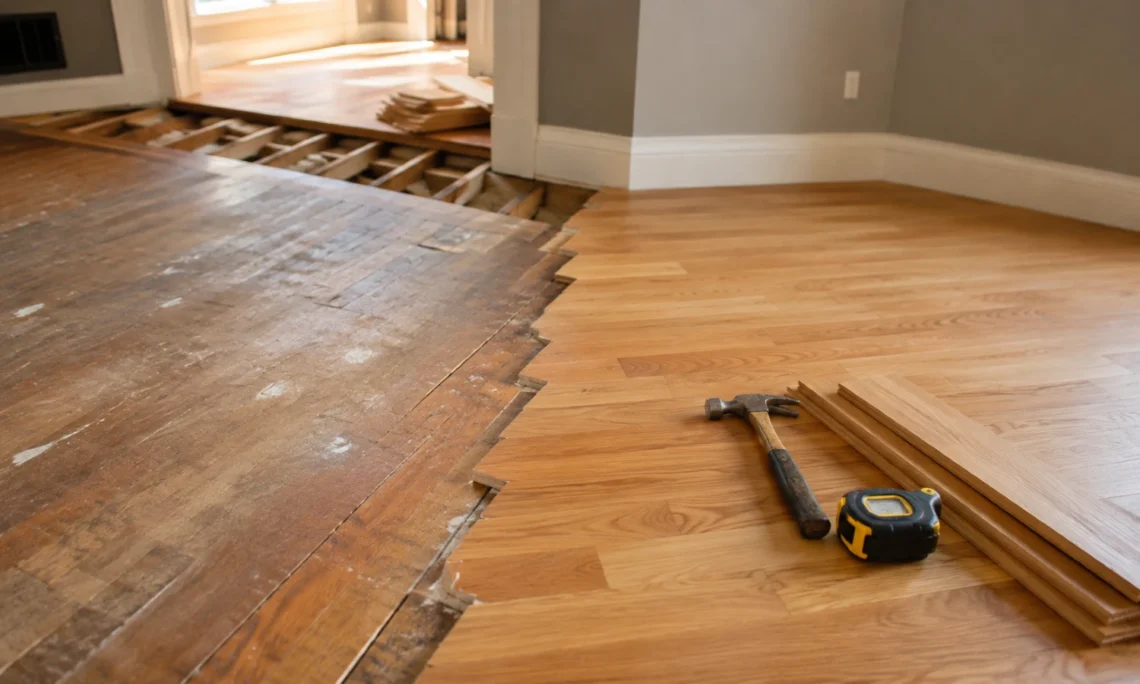
A tired hardwood floor can make an otherwise attractive room feel dated, but appearance alone does not reveal whether the floor should be refinished, repaired or removed. Grey traffic lanes, surface scratches and an old stain can be cosmetic. By contrast, moisture damage, excessive movement or a very thin wear layer may make replacement the more sensible long-term choice. The best decision begins with the floor itself, not with a new colour sample.
Before demolition, homeowners should identify the floor construction, inspect exposed edges, locate damaged areas and understand what sits beneath the boards. That short investigation can preserve usable wood, prevent avoidable waste and produce a more accurate renovation budget.
This condition-first approach is reflected in homeowner guidance from LV Flooring, a Toronto hardwood flooring contractor: identify the construction, usable sanding material, cause of damage and subfloor condition before deciding between hardwood refinishing, localized floor repair and full hardwood floor replacement.
Identify the Flooring Construction
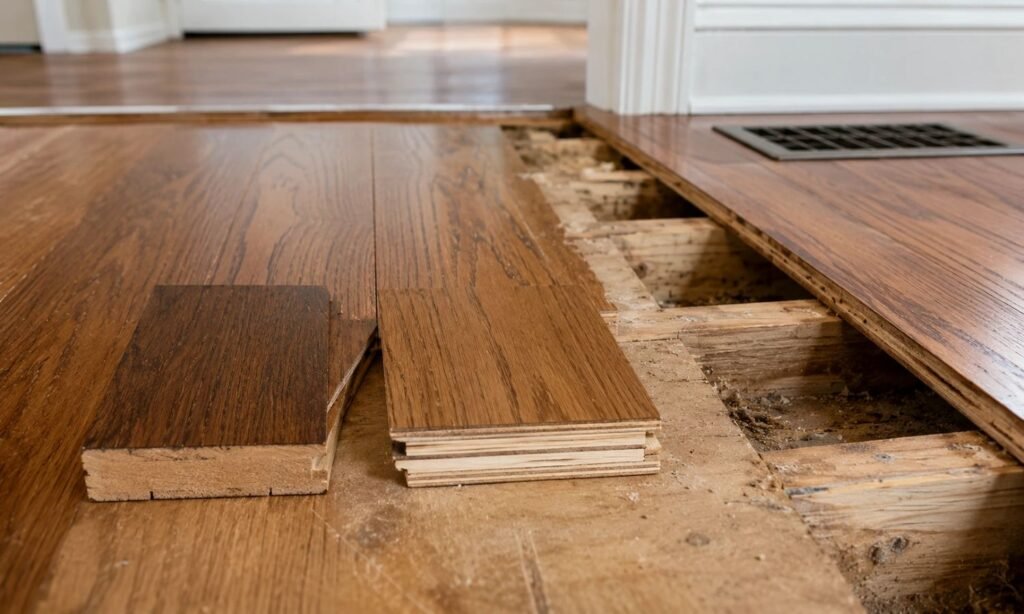
Solid hardwood and engineered hardwood may look almost identical from above, yet their refinishing potential can be very different. Solid hardwood is milled from one piece of wood. Engineered flooring uses a real-wood wear layer over a stable layered core, and the thickness of that top layer varies by product. Some engineered floors can be sanded more than once, some can tolerate only a light restoration, and others should not be sanded at all.
An exposed edge near a floor vent, doorway transition or stair nosing can help identify the construction. If the product is engineered, any available manufacturer information is useful. The key measurement is not the total thickness of the board, but the usable wood above the tongue-and-groove joint or core.
Check How Much Sanding Material Remains
Every full sanding removes a small amount of wood. A floor that has already been refinished several times may have fasteners, board edges or the tongue too close to the surface for another aggressive sanding. The condition can also vary across the room: hallways, doorways and other high-traffic areas may have been sanded more heavily than protected corners.
A contractor assessing hardwood floor refinishing should inspect more than one location and note exposed fasteners, unusually thin edges and previous repair work. A light abrasion and recoat may be possible when wear is limited to the finish, while deep scratches or a colour change usually require full sanding.
Separate Cosmetic Wear From Board Damage
Surface scratches, a dull sheen, small finish cracks and an unfashionable stain do not automatically justify replacement. These issues often sit at or near the surface. Deep black staining, soft wood, split boards, crushed edges, severe gaps and areas that flex underfoot deserve closer attention.
Even then, one damaged area does not necessarily condemn the entire floor. Individual boards can sometimes be replaced before sanding, and a skilled refinisher can blend the repair into the surrounding surface. The important distinction is whether the damage is local and stable or widespread and connected to an unresolved moisture or subfloor problem.
Resolve Moisture and Movement First
Cupping, crowning, dark board edges and recurring gaps can point to moisture imbalance. Sanding a distorted floor before the moisture source is corrected may make it appear flat temporarily, but the shape can change again as the wood returns to a normal moisture level. Nearby plumbing, exterior doors, appliances, concrete slabs, humid lower levels and previous leaks should be considered before surface work begins.
Movement and squeaks require the same discipline. A loose board may need only localized fastening, while widespread flex can indicate a subfloor or installation issue. Refinishing changes the visible surface; it does not repair the structure supporting it. Marking areas that move, click or sound hollow gives the contractor a practical map for further investigation.
Account for Seasonal and Local Conditions
In Toronto and other cold-climate markets, dry heated winters and humid summers can widen or close seasonal gaps without automatically indicating failure. Persistent cupping, staining or movement is different and should be investigated. Concrete condo slabs also introduce moisture, acoustic and finished-height considerations that may affect whether an existing wood floor is restored, removed or covered with an approved new assembly.
The useful questions are whether the condition changes with the season, whether moisture readings are stable, and whether the proposed work is compatible with the subfloor and building requirements. These checks prevent a cosmetic hardwood restoration from being used to hide a problem that will return.
Consider the Room and the Renovation Plan
A technically refinishable floor may still be the wrong floor for a major redesign. Removing walls can expose unfinished strips or incompatible board directions. New kitchens can change finished-height requirements. Extending wood into adjacent rooms may be difficult if the original species, grade or dimensions are no longer available. Conversely, an older floor with character may be worth preserving precisely because a new product would not reproduce its colour variation and patina.
Transitions, stair nosings, door clearances and adjoining tile should be reviewed as one system. Replacement can solve layout and height problems, but it also introduces removal, disposal and subfloor-preparation work that may not be obvious in a material quote.
Compare the Full Project Cost
A useful comparison includes more than the price of new boards. Review the likely hardwood floor removal and replacement costs, including demolition, disposal, subfloor repairs, levelling, new material, installation, transitions, trim and finishing. A realistic flooring removal cost should also account for whether the existing floor is floating, nailed, stapled or glued, because the removal method changes the labour and surface preparation. For refinishing, include board repairs, sanding, stain, finish coats, dust control and the time the room must remain out of service.
The lowest initial number is not always the lowest total. A replacement quote that excludes preparation can grow once the old floor is removed. A refinishing quote can also change if hidden damage is discovered. Written assumptions make competing options easier to compare and reduce surprises after work begins.
Questions to Answer Before Demolition
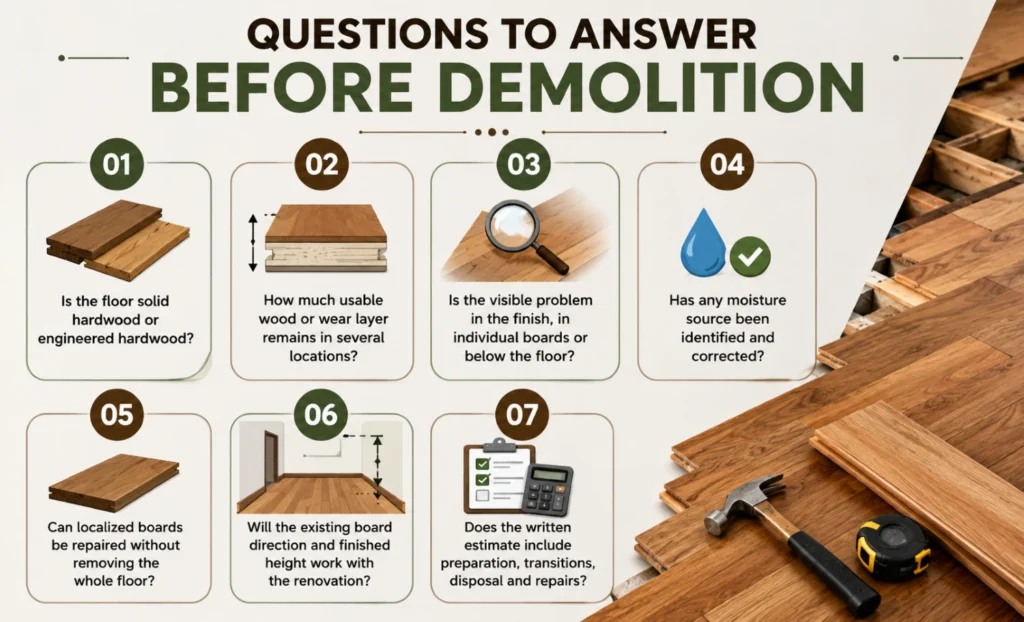
- Is the floor solid hardwood or engineered hardwood?
- How much usable wood or wear layer remains in several locations?
- Is the visible problem in the finish, in individual boards or below the floor?
- Has any moisture source been identified and corrected?
- Can localized boards be repaired without removing the whole floor?
- Will the existing board direction and finished height work with the renovation?
- Does the written estimate include preparation, transitions, disposal and repairs?
Choose From Evidence Rather Than Appearance
Refinishing is often the practical choice when the boards are stable, sufficient material remains and most wear is cosmetic. Partial hardwood floor repair followed by sanding and refinishing can preserve a floor with limited damage. Removing and replacing hardwood becomes more compelling when the wear layer is exhausted, moisture or structural damage is widespread, the layout is changing substantially, or the existing floor cannot be integrated with adjoining rooms.
A condition assessment should leave the homeowner with four clear facts: what the floor is made of, how much usable material remains, what is causing the damage and what preparation each option requires. With those questions answered, the decision becomes less about guesswork and more about choosing the result that fits the home, the renovation and the expected service life.