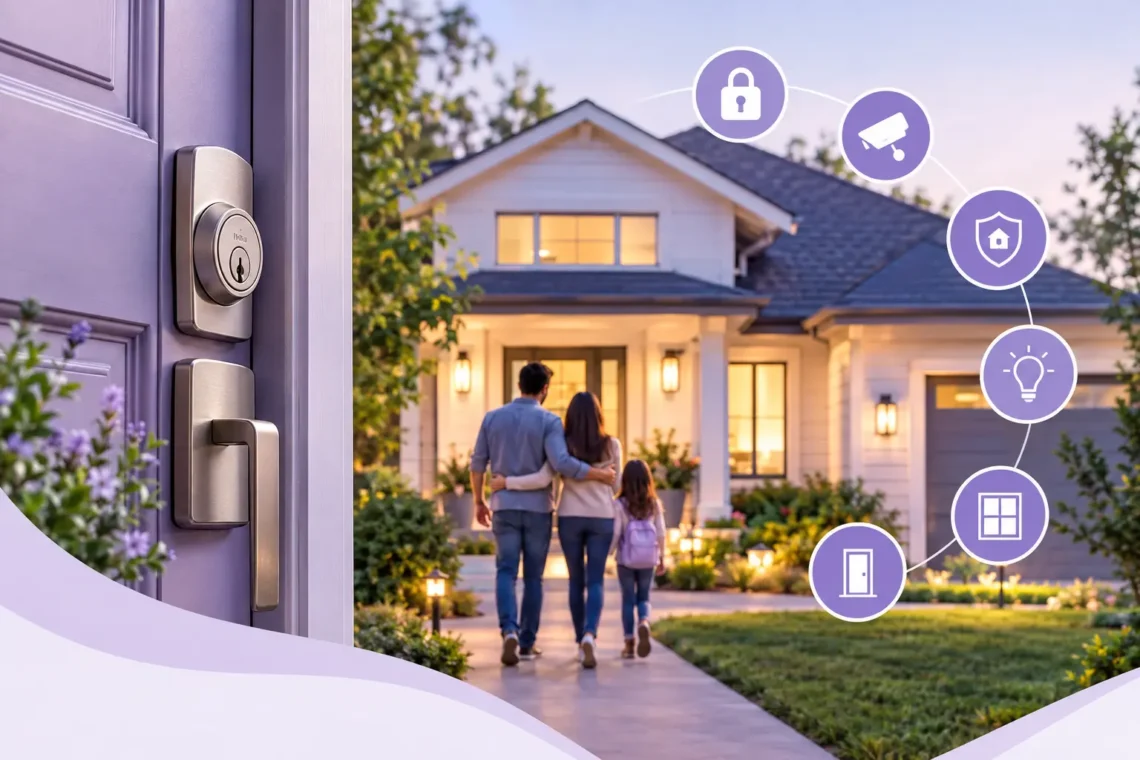
Imagine coming home after a long day. You park outside, walk toward your front door, and reach for your keys. Everything looks normal. The lights are on, the windows seem closed, and the neighbourhood feels quiet.
Yet there is one small thing that can make a huge difference: how secure is that front door?
Many homeowners spend money on cameras, alarms, motion lights, and smart devices while overlooking one of the oldest parts of home protection — the lock.
A strong lock does more than keep a door closed. It creates a physical barrier between your family and anyone who should not enter your home. When locks work alongside good daily habits, lighting, secure windows, and smart technology, your home can become much harder for an unwanted visitor to enter.
Learning how to improve home security with better locks is a practical place to start. You do not need to turn your home into a fortress. Small changes can make your property safer and give your family greater peace of mind.
Here are 15 practical household security tips that can help you create a safer home.
1. Upgrade Old Locks Before Adding More Security Devices
One of the easiest ways to strengthen a home is replacing old or weak locks.
If your front-door lock is several years old, check its condition. Does the key stick? Does the lock feel loose? Can the door move when it is locked? These signs suggest that the locking system may need attention.
Older locks may also lack modern security features. A stronger deadbolt, reinforced strike plate, and solid hardware can make a noticeable difference.
If you are wondering how to improve home security with better locks, start with the doors your family uses most often.
Pay special attention to:
- Front doors
- Back doors
- Garage entry doors
- Basement doors
- Side entrances
- Doors leading into the house
A secure lock is one of the simplest house security tips, yet it is often overlooked.
2. Choose a Strong Deadbolt for Exterior Doors
A regular spring-latch lock may not offer enough protection for an exterior door.
A quality deadbolt gives the door another layer of physical security. Look for a deadbolt that feels solid and fits correctly within the door and frame.
The lock itself is only one part of the setup. The surrounding hardware matters too.
A strong deadbolt paired with a weak door frame does not offer much protection. Make sure the screws holding the strike plate are long enough for a secure installation, and check that the frame is in good condition.
For families looking for practical home security suggestions, strengthening the main entry points is a smart starting point.
3. Reinforce the Door Frame
Think about your front door as a complete system.
You can have a high-quality lock, but if the surrounding frame is weak, the overall setup may still have vulnerabilities.
Check the area around the lock for cracks, loose wood, damaged sections, or old hardware. A reinforced strike plate can help distribute force across a larger section of the frame.
This small improvement can work especially well with a quality deadbolt.
When thinking about how to improve home security with better locks, remember that the lock, door, hinges, frame, and hardware all work together.
The Cybersecurity and Infrastructure Security Agency (CISA) recommends securing exterior doors and windows with appropriate locking devices and also suggests advanced locking systems for entry points.
4. Do Not Hide Spare Keys in Obvious Places
That small fake rock near the front door may seem like a clever hiding place.
Unfortunately, common hiding spots are not really secret.
Avoid placing spare keys:
- Under doormats
- Inside flowerpots
- Above door frames
- Under nearby rocks
- Inside outdoor decorative items
- In unlocked mailboxes
If someone needs access to your home, a trusted person can hold a spare key instead.
A smart lock can also reduce the need for physical spare keys. Some models let homeowners create temporary access codes for family members, guests, or service workers.
This is one of those household security tips that costs little but can remove an unnecessary security risk.
5. Secure Every Door Leading Into the Garage
Garages are often treated differently from other entry points.
People may lock the front door but leave the garage entry door unlocked. That can create an unnecessary weakness.
Check both the main garage door and the interior door leading into your house.
Make sure the interior door has a strong lock and that everyone in the household remembers to use it.
Also avoid leaving the garage remote inside an unlocked vehicle parked outside.
A few simple changes can turn your garage from a weak entry point into another secure layer.
6. Upgrade Your Door Hardware
Locks are important, but small pieces of hardware can matter too.
Look at your:
- Strike plates
- Door hinges
- Screws
- Door handles
- Latches
- Door frame
Loose or worn hardware can reduce the strength of the entire door.
If your exterior door opens outward, pay special attention to hinge security. Depending on the door design, exposed hinges may need additional protection.
This is an excellent example of how practical security ideas often involve simple maintenance rather than expensive technology.
7. Add a Smart Lock If It Fits Your Lifestyle
Smart locks have changed the way many families manage access.
Instead of carrying a physical key, some smart locks allow entry through a code, phone, fingerprint, or another approved method.
They can also make access easier when you have children, guests, cleaners, or relatives visiting regularly.
For example, imagine a family member arrives home while you are still at work. Rather than leaving a key under the mat, you can use an approved access method.
Before choosing a smart lock, check:
- Battery life
- Backup entry options
- Lock compatibility
- App security
- User access controls
- Emergency access options
Technology can be useful, but a smart lock should still have a strong physical locking mechanism.
8. Check Your Windows, Not Just Your Doors
Doors usually receive the most attention, but windows deserve equal care.
A ground-floor window can become an easy entry point if it does not close properly or has a damaged latch.
Walk around your house and inspect every accessible window.
Look for:
- Broken latches
- Loose frames
- Damaged glass
- Windows that do not fully close
- Weak locks
- Basement windows without adequate protection
You can also use window sensors as part of a home alarm system.
One useful home security tip is simple: check windows after cleaning, repairs, or seasonal changes. A window that was secure last year may not remain secure forever.
9. Make Your Home Look Occupied
A dark, empty-looking house can attract unwanted attention.
If your family is away for several days, avoid making the property look vacant.
You can use timers for indoor lights or smart lighting systems that switch lights on at different times.
Ask a trusted neighbour to collect mail and packages if you are away for an extended period.
Keep curtains positioned naturally rather than leaving every window completely covered for days.
The goal is not to make your home look unusual. The goal is to maintain normal activity.
10. Improve Outdoor Lighting
Good lighting can make entrances, pathways, and other areas easier to see.
Motion-activated lights are useful around:
- Front doors
- Back doors
- Garages
- Side paths
- Driveways
- Dark corners around the property
Lighting does not replace locks or alarms, but it can support the rest of your security setup.
When planning how to improve home security with better locks, look at the surroundings as well. A strong lock works even better when your entry area is visible and well maintained.
CISA also recommends good exterior lighting, securing sliding doors, keeping doors and windows locked, and maintaining clear visibility around the home as part of residential security practices.
11. Keep Valuable Items Away From Windows
A person walking past your home should not easily see expensive electronics, jewellery, wallets, or other valuable items.
Large windows can sometimes offer a clear view into living rooms, bedrooms, or home offices.
Rearrange valuable belongings if they are visible through exterior windows.
For example, placing a laptop directly beside a front-facing window may not be the best idea.
This simple change costs nothing and can reduce the amount of valuable information visible outside your home.
12. Use Security Cameras Strategically
Security cameras can add useful visibility around your property.
You do not necessarily need cameras everywhere. Start with areas that matter most, such as:
- Main entrance
- Driveway
- Garage
- Backyard entrance
- Side passage
Position cameras so they cover important areas without unnecessarily recording private spaces.
If you use smart cameras, secure your accounts with strong passwords and multi-factor authentication when available.
Cameras work best as part of a wider security plan rather than as a replacement for good locks.
13. Create a Simple Family Locking Routine
Even the best security system can fail if household members forget to use it.
Create a simple routine everyone understands.
Before bed, someone can check:
- Front door locked
- Back door locked
- Garage door closed
- Accessible windows secured
- Outdoor lights switched on if needed
- Alarm system activated
- Side entrances checked
This routine takes only a few minutes.
Children can also learn basic safety habits as they grow older. Teach them never to open the door for unknown visitors and never to share access codes casually.
Simple routines are among the most useful household security tips because they turn security into a daily habit.
14. Review Who Has Access to Your Home
Think about how many people currently have keys or access codes.
Former tenants, old roommates, contractors, cleaners, previous homeowners, or even neighbours may still have access if codes and locks were never changed.
If you move into a new home, changing the locks should be one of your first security tasks.
The same applies after losing a key.
If a physical key disappears and you cannot confirm where it went, replacing or rekeying the lock may make more sense than simply hoping the key will never be used.
This is another important part of understanding how to improve home security with better locks. Security is not only about choosing a strong lock. It is also about controlling who can open it.
15. Build a Complete Home Security Plan
A secure home usually does not rely on one product.
Think of security as several layers working together.
| Security Layer | What It Does | Simple Action |
|---|---|---|
| Door locks | Controls physical entry | Use strong exterior locks |
| Door frame | Supports the lock | Reinforce weak areas |
| Windows | Protects secondary entry points | Check latches and locks |
| Lighting | Improves visibility | Use motion lights |
| Cameras | Adds visual monitoring | Cover key entry areas |
| Alarm system | Alerts you about activity | Activate it when leaving |
| Smart locks | Manages access | Use secure codes |
| Family routines | Prevents careless mistakes | Lock doors every night |
This layered approach makes your home security plan more practical.
Instead of asking which single device will keep your family safe, ask how each layer supports the others.
What Should You Improve First?
If your budget is limited, start with the basics.
A sensible order could look like this:
- Repair damaged doors and frames.
- Upgrade weak exterior locks.
- Secure garage and basement entrances.
- Check all accessible windows.
- Improve outdoor lighting.
- Add cameras where they are most useful.
- Add smart access features if they suit your household.
- Review your security routine every few months.
This approach lets you improve security gradually without making the process overwhelming.
How to Improve Home Security with Better Locks Without Overcomplicating Things
Home security does not need to become a complicated project.
Start with the places where someone would naturally try to enter. Check the locks, inspect the frames, look at the windows, and think about who currently has access.
Then build extra layers around those basics.
A family living in a quiet suburban home may have different needs than someone living in an apartment building. A household with young children may also have different access concerns than a home occupied only by adults.
The right solution should match the property and the people living there.
If you are still asking how to improve home security with better locks, remember one simple idea: strong locks matter most when they are part of a complete security routine.
Common Home Security Mistakes Worth Avoiding
Sometimes security problems are not caused by a lack of equipment. They happen because of small everyday habits.
Here are a few common mistakes worth checking:
- Leaving doors unlocked during the day
- Keeping spare keys in obvious locations
- Using the same access code for everyone
- Forgetting about garage entry doors
- Leaving expensive items visible through windows
- Ignoring damaged door frames
- Leaving windows partially open
- Sharing smart-lock codes without reviewing access
- Forgetting to lock doors before going to bed
- Assuming a security camera alone is enough
Fixing these habits can make your existing security setup much more useful.
Final Thoughts: Small Changes Can Make Your Home Safer
Your home should feel like the place where your family can relax without constantly worrying about security.
You do not need dozens of gadgets or an expensive system for that feeling. Strong exterior locks, secure doors, protected windows, good lighting, smart access controls, cameras, and simple family routines can create several layers of protection.
The best home security advice is often surprisingly practical: secure the main entry points, know who has access, check your hardware regularly, and make security part of your everyday routine.
If you have not checked your locks recently, start there.
Look at your front door today. Test the lock. Check the frame. Look at the screws and strike plate. Then walk around your property and inspect the other entry points.
Those few minutes can reveal problems you may never have noticed.
And when you put all these house security tips together, you create something more valuable than a collection of security products — you create a safer environment for the people you care about.