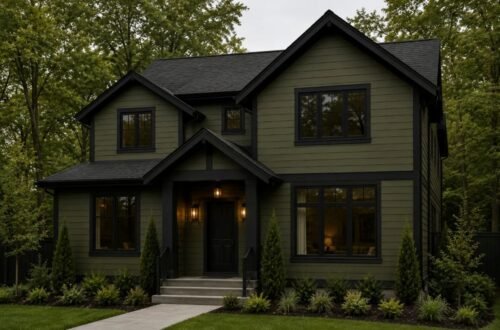
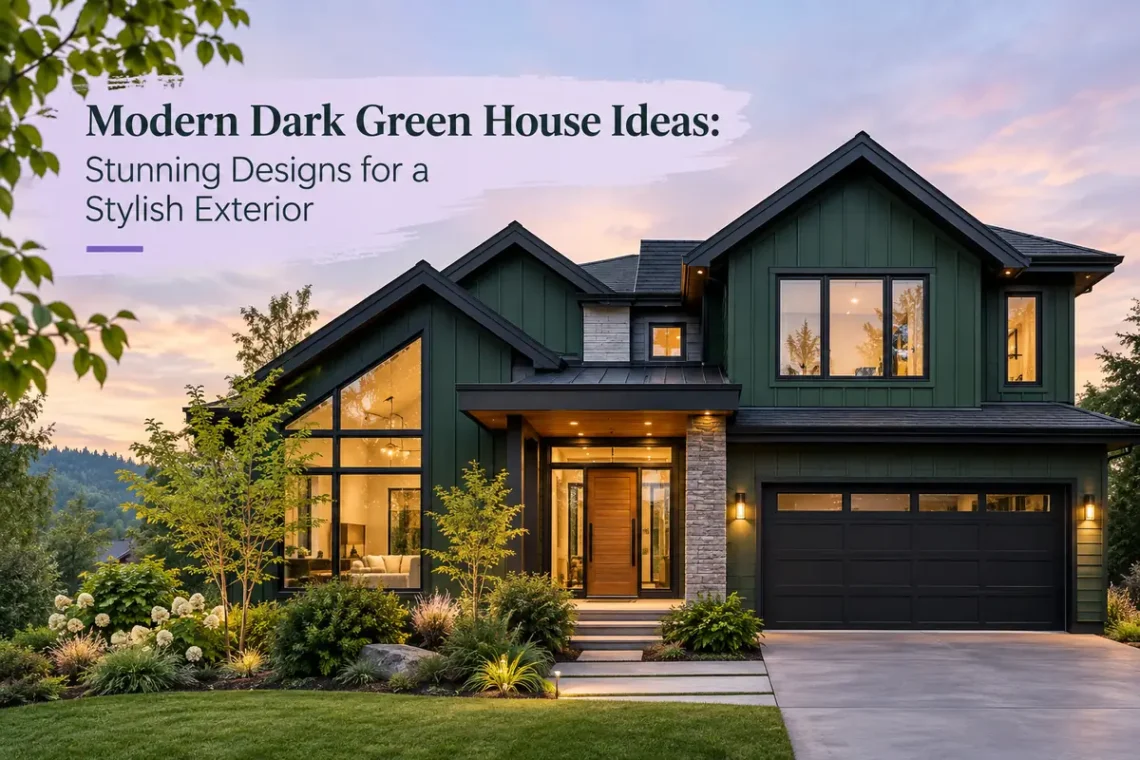
Picture driving home at sunset and seeing a deep green exterior framed with warm porch lights, natural stone, and soft landscaping. The color feels rich without being loud. It has a connection with nature, yet it can look surprisingly sleek when paired with crisp architectural details.
That is the appeal of a modern dark green house. Deep green can give a home personality while working beautifully with wood, stone, black accents, warm lighting, and simple landscaping. It can suit a compact suburban property just as well as a large contemporary home.
Green exterior colors also offer plenty of room for creativity. Benjamin Moore’s exterior collection includes shades such as Louisburg Green, Hunter Green, Essex Green, and Rainforest Foliage, showing how wide the dark-green palette can be. (Benjamin Moore)
If you’re planning a fresh exterior look, these ideas can help you choose the right shade, trim, materials, lighting, and landscaping for your home.


Why Is a Modern Dark Green House So Appealing?
Deep green has a naturally grounded feeling. It reminds us of forests, trees, moss, and leafy gardens, which makes it easy to connect with outdoor spaces.
At the same time, a dark green exterior can feel contemporary when the architecture has clean lines, large windows, simple roof shapes, and minimal decoration.
One reason this color works so well is its flexibility. You can create several different moods depending on the surrounding materials.
For example:
- Black trim creates a sharp, dramatic appearance.
- Natural wood adds warmth.
- Light stone creates contrast.
- Cream accents soften the facade.
- Brass or bronze lighting adds a refined touch.
- Gray concrete creates a minimalist appearance.
- Lush plants strengthen the connection with nature.
The result doesn’t have to look overly traditional. With the right combination, deep green can create an exterior that feels current, comfortable, and distinctive.
1. Choose the Right Dark Green Shade
Not every dark green looks the same. Some shades have blue undertones, while others lean toward gray, olive, moss, or almost-black green.
The surrounding environment can also change how a paint color looks. A shade that feels rich and warm under afternoon sunlight may appear much deeper during the evening.
Popular directions for dark green
Forest green:
A classic choice with a natural, earthy character. It works particularly well with wood, stone, and black details.
Hunter green:
A deeper shade that creates a dramatic facade. It can suit traditional and contemporary architecture.
Emerald green:
A slightly livelier option. It works well when you want a richer green that still has plenty of depth.
Black-green:
A moody choice that can appear almost black in low light. It suits minimalist architecture and bold exterior details.
Moss green:
A softer earthy option that works beautifully with natural landscaping.
Benjamin Moore’s dark green collection includes shades such as Hunter Green, Forest Green, Regent Green, and Salamander, giving homeowners several directions for a deeper exterior palette. (Benjamin Moore)
Before painting the entire exterior, test samples on different walls. Look at them during morning, afternoon, and evening light. This simple step can prevent an expensive color surprise later.
2. Pair Deep Green With Black Trim
One of the most striking combinations for a modern dark green house is deep green siding with black trim.
Black can outline windows, doors, roof edges, garage doors, and architectural sections. The contrast creates clear visual lines without adding extra decorative elements.

Where can black accents work?
Try black on:
- Window frames
- Front doors
- Garage doors
- Porch railings
- Exterior lighting
- Gutters
- Downspouts
- Metal roof sections
- House numbers
- Fence panels
The key is balance. If every exterior feature is black, the facade may feel too heavy. A better approach is using black around the features you want people to notice.
Large black-framed windows can look especially impressive against a deep green wall. They create a strong graphic effect while keeping the exterior visually clean.
3. Add Natural Wood for Warmth
Deep green and black can create a dramatic combination, but wood can soften the overall appearance.
Imagine a dark green facade with a warm cedar front door. Add a small timber porch ceiling and a few wooden planters, and the house immediately feels more welcoming.
Wood works particularly well around the entrance because it creates a visual transition between the street and the interior.
You don’t need large amounts of timber. Small areas can have a strong impact.
Try:
- A natural wood front door
- Cedar porch columns
- Timber soffits
- Wooden garage doors
- Vertical wood panels
- Wood planters
- A small wood privacy screen
For a contemporary house, clean horizontal or vertical wood panels can add texture without making the facade look busy.
4. Use Stone and Concrete for a Contemporary Look
Stone is another excellent partner for deep green.
Gray stone can create a cool, modern appearance, while beige or warm stone can make the exterior feel softer.
A stone entry wall can act as a visual anchor. You could also use stone around the garage, chimney, porch columns, or lower portion of the facade.
Concrete works well with minimalist architecture. A simple concrete walkway leading toward a dark green exterior can create a clean visual path.
A simple material combination
| Exterior element | Suggested finish | Visual effect |
|---|---|---|
| Main siding | Deep forest green | Rich and natural |
| Window frames | Matte black | Strong contrast |
| Front door | Natural wood | Warm and inviting |
| Entry wall | Gray stone | Modern texture |
| Walkway | Light concrete | Clean contrast |
| Lighting | Warm white | Soft evening glow |
This combination works because each material has a clear role. The green creates the main identity, black defines architectural details, wood adds warmth, and stone or concrete introduces texture.
5. Try a Modern Dark Green House With Large Windows
Large windows can transform the appearance of a dark exterior.
Deep colors absorb visual attention, while large areas of glass create openness. The contrast can make a house feel both private and connected with its surroundings.
Floor-to-ceiling windows work especially well on contemporary homes. Black frames can continue the darker color palette, while warm interior lighting creates a beautiful appearance after sunset.
For a smaller property, large windows can also help the exterior feel less enclosed.
Think about how the windows interact with:
- Rooflines
- Exterior lighting
- Landscaping
- Window placement
- Privacy needs
- Interior room layouts
A wall of glass facing a garden can create a strong relationship between the house and outdoor space.
6. Create Contrast With a Light Front Door
A dark green exterior doesn’t always need dark accents everywhere.
A cream, warm white, pale wood, or muted tan front door can become a welcoming focal point.
This approach works particularly well when the home has a smaller entrance. A lighter door immediately draws attention toward the doorway.
You can also use a lighter shade on:
- Porch ceilings
- Garage accents
- Window surrounds
- House numbers
- Planters
- Outdoor furniture
If your exterior already has black windows and dark roofing, a lighter entrance can stop the overall palette from feeling too heavy.
For inspiration, Benjamin Moore’s exterior guidance shows how body color, trim, doors, and accent colors can work together as one coordinated palette. (Benjamin Moore)


7. Use Landscaping That Complements the Green Exterior
Landscaping can completely change how a dark exterior looks.
A green facade surrounded by random plants may lose some of its visual impact. A simple, structured garden can make the architecture stand out.
Try layering different types of greenery rather than filling every available space.
Ideas for a polished front garden
Low shrubs:
Place compact shrubs near pathways and windows.
Ornamental grasses:
Their soft movement creates contrast against straight architectural lines.
Small trees:
Trees can frame the house and add height.
Flowering plants:
White, cream, pale pink, or soft lavender flowers can stand out beautifully against deep green.
Ground cover:
Low planting can create a neat transition between the lawn and facade.
Large planters:
Place matching planters near the entrance for symmetry.
Think about the full picture. The goal isn’t simply to add more plants. The goal is to create layers that support the home’s architecture.
8. Make Exterior Lighting Part of the Design
A beautiful exterior can look completely different once the sun goes down.
Warm lighting works particularly well with deep green because it creates a soft contrast against the cooler appearance of the exterior.
Wall lights can highlight textured surfaces. Downlights can illuminate pathways. Small garden lights can draw attention toward trees and shrubs.
Lighting ideas worth trying
- Wall sconces beside the front door
- Step lights near stairs
- Pathway lights along the walkway
- Uplights near trees
- Garage lighting
- Under-eave lighting
- Small lights near landscaping
Avoid turning the whole facade into a brightly lit wall. Selective lighting often creates a more sophisticated effect.
A warm glow around the entrance can also make the home feel inviting during evening hours.
9. Match the Roof With the Green Exterior
The roof is a major part of the exterior color story, so it shouldn’t be treated as an afterthought.
Black or charcoal roofing creates a strong monochromatic appearance with dark green. This works particularly well on modern homes with simple roof shapes.
Gray roofing offers a softer transition. Brown or weathered wood tones can work nicely when the house has a more natural architectural style.
Roof and green color combinations
- Deep green + black roof = dramatic and contemporary
- Forest green + charcoal roof = balanced and understated
- Moss green + brown roof = earthy and relaxed
- Dark green + gray roof = modern and neutral
- Deep green + natural metal roof = distinctive and architectural
If you’re changing the roof and siding together, look at physical samples outdoors. Screen colors can differ significantly depending on lighting and display settings.
10. Give the Front Door Extra Attention
The front door is one of the easiest areas for adding personality.
A black door creates a seamless look with black window frames. A natural wood door adds warmth. A muted cream door creates contrast. A deep burgundy or muted blue can introduce a small accent color.
Think about the style of your home before choosing the door color.
For a minimalist home
Choose a simple door with clean panels and understated hardware.
For a Craftsman-style home
Natural wood, glass panels, and traditional hardware can work beautifully.
For a modern farmhouse
A simple wood or black door paired with clean lighting can create a relaxed appearance.
For a contemporary home
A large flat-panel door with minimal hardware can complement strong geometric architecture.
The front door should feel connected with the rest of the facade rather than looking like a separate design decision.
What Exterior Colors Work Well With Dark Green?
A modern dark green house gives you plenty of flexibility with accent colors.
The best combination depends on the exact green, architecture, roof, landscaping, and amount of natural light.
Here are several combinations worth testing:
Green + Black
Strong and dramatic. Great for window frames, doors, roofing, and modern architecture.
Green + Natural Wood
Warm and welcoming. Ideal for entrances, porch ceilings, garage doors, and decorative panels.
Green + Cream
Soft and classic. A useful choice if you want less contrast than bright white.
Green + Gray
Clean and contemporary. Gray concrete, stone, or roofing can work especially well.
Green + Brass
Warm metallic accents can add subtle character through door hardware, lights, and house numbers.
Sherwin-Williams features Greenblack SW 6994 among its shared real-home exterior examples, illustrating how a very deep green can work within a natural outdoor setting.
How Can You Keep a Dark Green Exterior Looking Balanced?
Deep exterior colors make a strong statement, so balance matters.
Start with one main color. Then choose two or three supporting materials or accent shades.
For example:
Main: Forest green siding
Secondary: Matte black windows
Accent: Natural wood door
Texture: Gray stone
Landscape: Green shrubs with white flowers
This gives every element a purpose.
Try not to introduce too many competing colors. A limited palette usually makes architectural details easier to notice.
You should also think about the home’s surroundings. A house surrounded by tall trees may need a slightly lighter or warmer green so the exterior doesn’t disappear into the landscape. A home in an open neighborhood can handle a deeper shade because the facade has more visual separation.
How Do You Choose the Right Green for Your Home?
Before making a final decision, look at the color under real outdoor conditions.
Paint samples on several sides of the house if possible. A north-facing wall can appear different from a south-facing wall. Nearby trees, paving, roofing, and neighboring houses can also influence how the shade feels.
Ask yourself:
- Does the color work with the roof?
- Does it suit the architectural style?
- Does it complement the landscaping?
- Does the trim create enough contrast?
- Does the entrance stand out?
- Does the color still look good in evening light?
- Does it work with nearby homes?
- Are there neighborhood color rules that need checking?
Sherwin-Williams notes that exterior colors can look different depending on the viewing environment and offers visualization tools for testing color combinations. (Sherwin-Williams)
Testing samples before a full exterior project can save time, money, and frustration.
Final Thoughts on Modern Dark Green Exterior Design
A modern dark green house can feel bold, natural, warm, and contemporary all at once. The secret is not simply choosing a dark green paint. The complete exterior needs to work as one visual story.
Pair deep green with black when you want crisp contrast. Add wood for warmth, stone for texture, and carefully planned landscaping for a stronger connection with nature. Large windows can make the facade feel open, while warm lighting can make it inviting after sunset.
Most importantly, choose a green shade that works with your home’s architecture and natural surroundings. Test samples in real daylight, look at the color at different times, and build the rest of the palette around the main exterior color.
With thoughtful choices, your home can have an exterior that feels personal, welcoming, and stylish for years.
Ready to Refresh Your Home Exterior?
Whether you’re planning a complete exterior makeover or simply searching for inspiration for your next project, start with the elements that matter most: siding color, trim, roofing, lighting, materials, and landscaping. A well-planned combination can turn an ordinary facade into a memorable home exterior.