Rick bought his 1962 side-split in October. He loved the brick most of all. Thick, warm red brick that made the house look like it had been standing there forever and fully intended on staying.
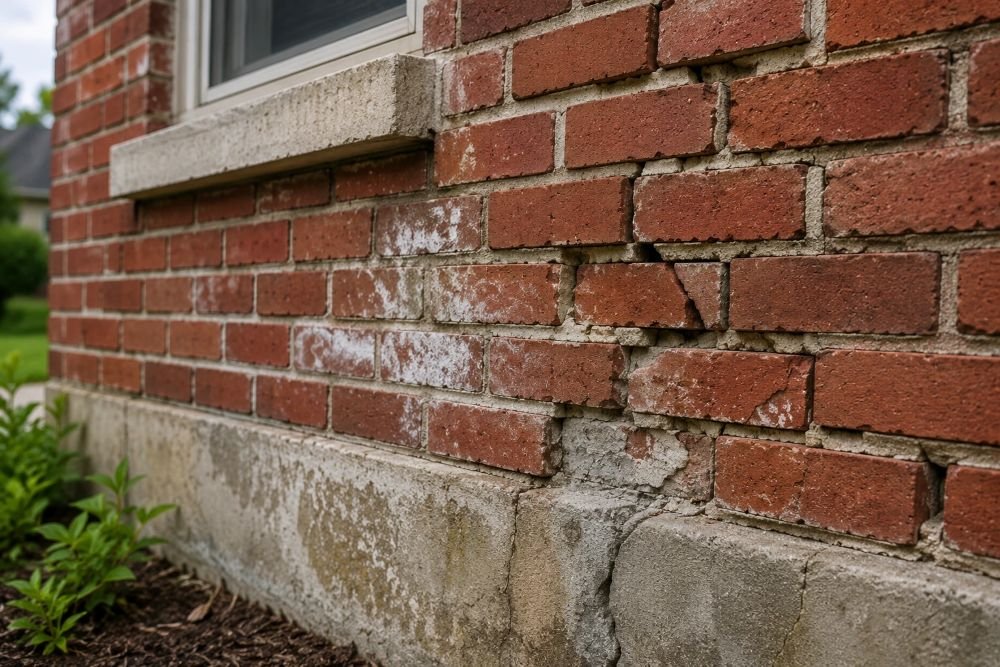
Two winters later he was hosing down the driveway when he spotted a chalky white streak running down the wall near the back door. He rubbed it with his thumb. It came off as powder. He shrugged and finished the driveway.
The next spring, that streak had company. A hairline crack stepped its way up three courses of brick above the basement window. The mortar under the kitchen sill had gone soft enough that he could scrape it out with a house key. What looked like a cosmetic smudge had actually been a water problem quietly chewing on his exterior walls for two full seasons.
Here is the thing about Masonry Damage: it almost never announces itself. No alarm, no leak in the ceiling, no dramatic moment. It shows up as something small you notice while doing something else, and then you forget about it until it stops being small.
This guide walks you through the warning signs your brick, stone, and concrete are already showing you, what each one actually means, and when a masonry contractor needs to be in the picture.
Masonry Damage Rarely Starts Where You Can See It
Brick Masonry, Stone Masonry, and Concrete Masonry all share one weakness, and it is not strength. Your brick walls can hold up a house for a century. What they cannot do is stay dry on their own forever.
Mortar is the soft part of the system, and that is on purpose. Good Masonry Construction uses mortar that is slightly weaker than the brick around it, so movement and pressure crack the cheap sacrificial layer instead of the expensive structural one. Mortar Joints are the pressure valve of the whole building envelope.
So the damage usually begins in the joints, spreads into the brickwork, and only reaches the interior of your home after it has been going for a while. The signs below run roughly in that order, starting with the earliest.
What Makes Brick, Stone, and Concrete Break Down?
Three culprits do most of the work, and they usually team up.
Water Getting In and Staying In
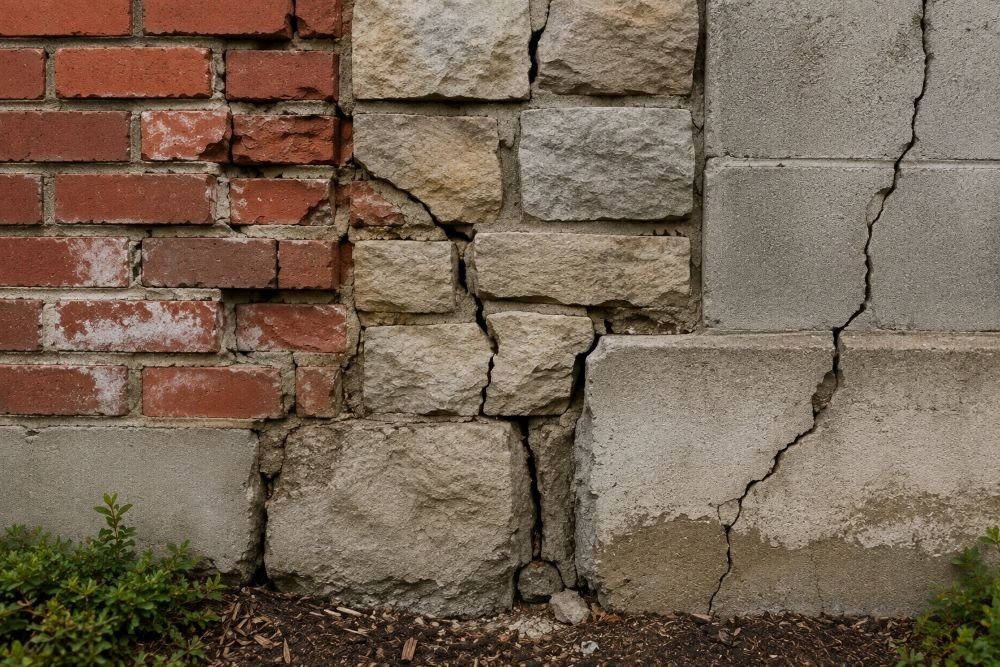
Masonry is porous. It absorbs Moisture Damage the way a sponge does, and it needs a path back out. Clogged weep holes, sealed-over brick, bad grading, and leaking gutters all trap water inside the wall. Once water has nowhere to go, it starts dissolving the lime in your mortar and pushing salts out through the face of the brick.
Freeze-Thaw Damage
Water inside a wall expands roughly nine percent when it freezes. That expansion pushes brick faces apart and pops the outer skin off in flakes, which masons call spalling. Canadian and northern US homes go through dozens of freeze-thaw cycles every winter, so a small crack in November can be a real Masonry Repair job in March.
Ground Movement and Settling
Clay soil swells when wet and shrinks when dry. Foundations shift a little as this happens, and Structural Masonry above the foundation moves with it. Small settling is normal in any house. Ongoing movement is what leaves you with Foundation Cracks and stair-step cracking.
Sign 1: Cracked Bricks and Stair-Step Cracking
Not every crack is a crisis. Learn the difference and you save yourself a lot of worry.
Hairline cracks in the mortar only. Usually cosmetic aging. Watch them, mark the ends with a pencil, check in six months.
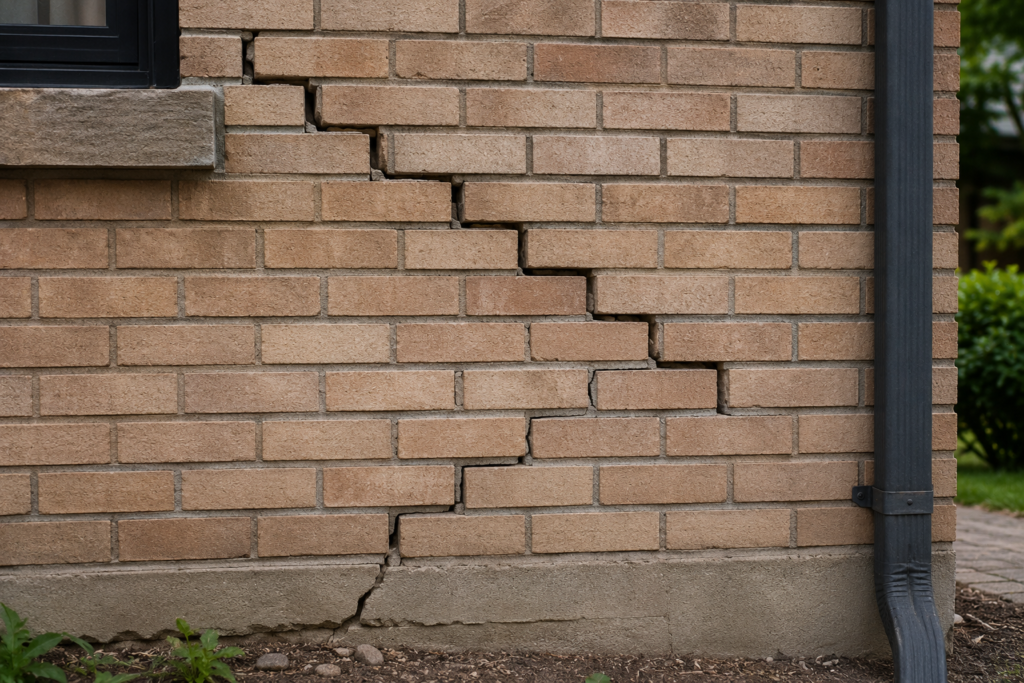
Stair-step cracks that climb the mortar joints diagonally. These follow the path of least resistance and point straight at foundation movement. Take these seriously.
Cracked Bricks where the crack runs through the brick face itself. The brick is stronger than the mortar, so if the crack chose the hard route, real force is at work. Call someone.
Vertical cracks near corners or openings. Often a lintel problem above a window or door, especially if the steel lintel is rusting and expanding.
A quick field test: slide a nickel into the crack. If it disappears, that gap is wide enough to invite water in, and water is what turns a small crack into Structural Damage.
Sign 2: Crumbling Mortar Joints and Failing Brickwork
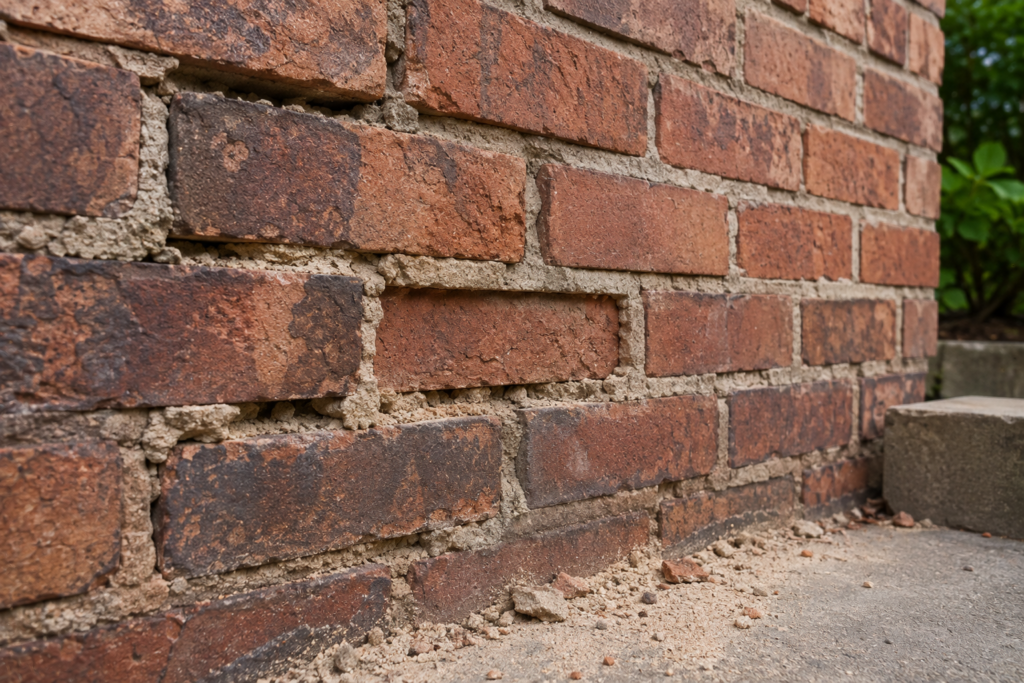
This is the single most common early sign, and the easiest one to check yourself.
Grab a screwdriver or an old key and drag it firmly along a mortar joint on your exterior walls. Healthy mortar shrugs it off. Failing mortar gives you sand and dust.
Watch for:
- Joints that have receded deeper than about a quarter inch behind the brick face
- Sandy residue collecting on the ground along the base of a wall
- Sections where the mortar colour looks noticeably lighter or patchier than the rest
- Gaps you can see daylight or shadow through
Recessed joints act like little shelves. They catch rain, hold it against the brick, and feed the freeze-thaw cycle all winter. Repointing at this stage costs a fraction of what Brick Replacement costs later.
Sign 3: What Does White Powder on Brick Walls Mean?
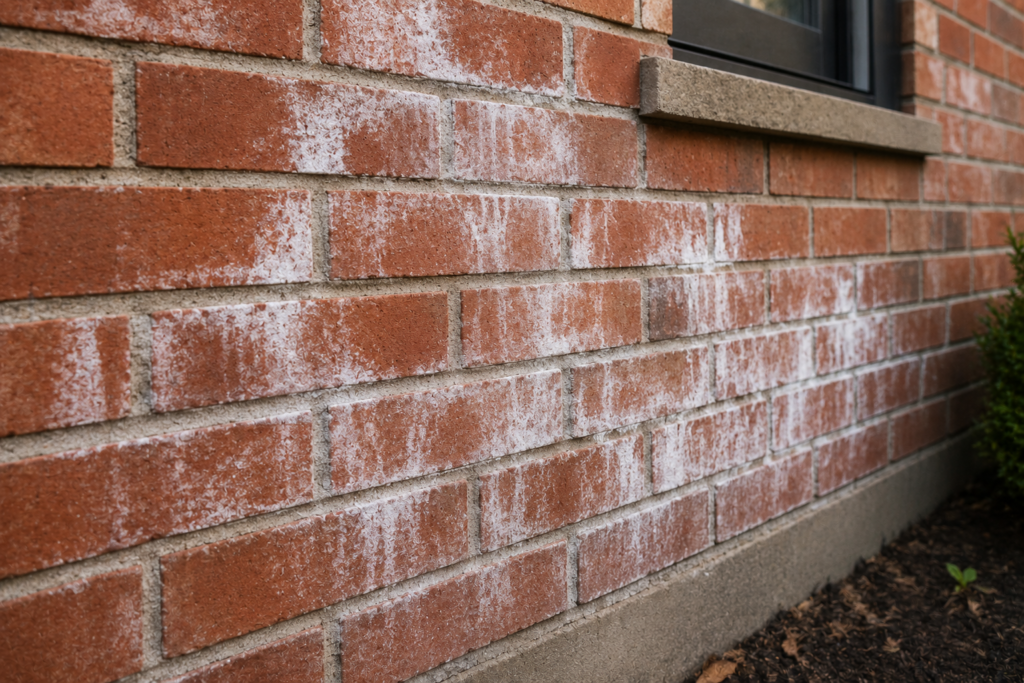
That chalky white bloom is called Efflorescence, and it is what stumped Rick for two years.
It happens when water travels through masonry, dissolves natural salts inside the brick and mortar, then evaporates at the surface and leaves those salts behind. The powder itself is harmless. What it tells you is not.
Efflorescence is proof that water is actively moving through your wall. A light dusting on a new build during its first year is normal as construction moisture works its way out. Heavy, repeating, or spreading Efflorescence on an older home means you have a live Water Damage path.
Scrub it off with a stiff brush and plain water. If it comes back within a few months, stop treating the stain and start looking for the source.
Sign 4: Loose Bricks, Bulging Walls, and Spalling Faces
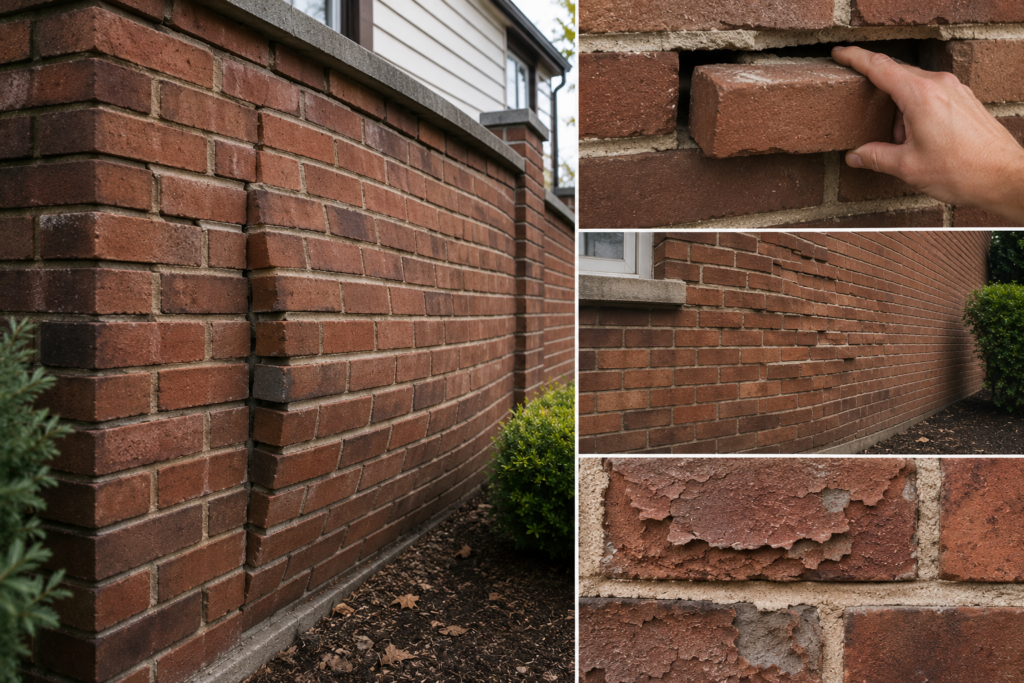
Push gently on a suspect brick. If it rocks, shifts, or feels spongy, it has lost its bond with the surrounding mortar.
Loose Bricks near the top of a wall, around a chimney, or along a retaining wall are the ones that worry masons most, because gravity is already helping the problem along.
Then step well back and sight down the length of your wall, the way you would check a board for warp. You are looking for:
- Bulges or belly shapes pushing outward
- Sections that lean away from vertical
- Wavy lines in what should be dead-straight brick courses
- Brick faces flaking, blistering, or popping off in thin layers
That last one is spalling, and it is the visible result of freeze-thaw pressure. Once the hard outer face of a brick has broken away, the soft inner core soaks up water even faster. Spalled brickwork accelerates on its own, which is why patching it early matters so much.
Sign 5: Is Your Chimney Trying to Tell You Something?
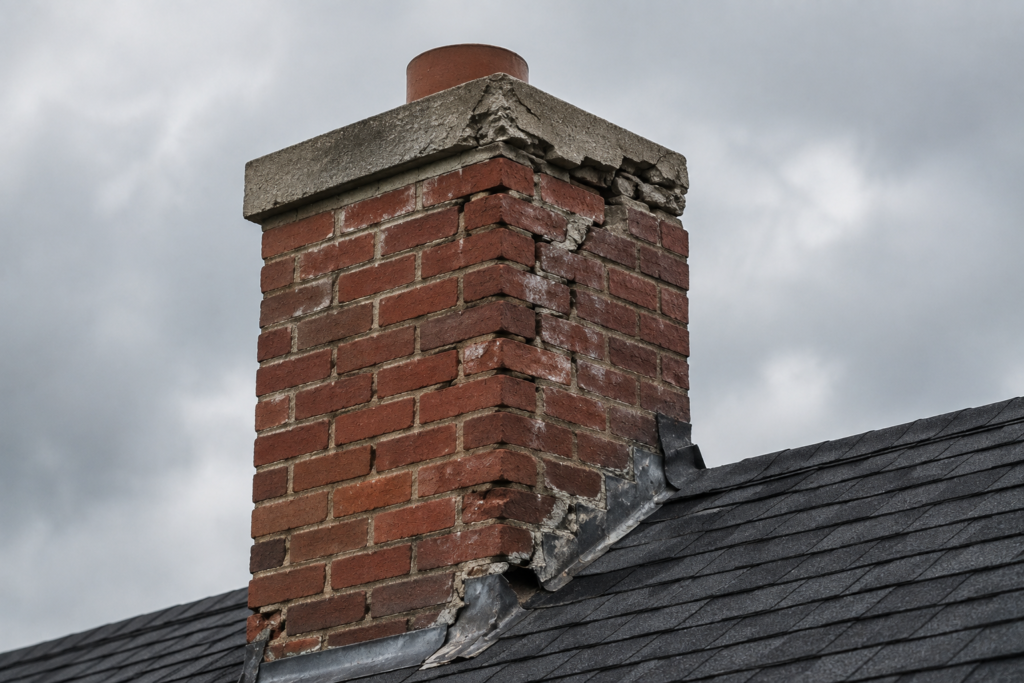
Chimneys take more abuse than any other masonry on your property. They stand alone in the weather with no shelter on any side, they run hot and cold, and almost nobody looks at them closely.
Signs your chimney needs Chimney Repair:
- A visible lean away from the roofline
- A gap opening up where the chimney meets the roof flashing
- Crumbling mortar visible in the crown at the top
- Rust stains on the firebox damper or interior brick
- Pieces of masonry showing up in the fireplace or on the ground
- Dampness on interior walls in the room where the chimney runs
The chimney crown is the sloped concrete cap at the very top, and it is the part that fails first. A cracked crown funnels every drop of rain straight down into the middle of the stack.
Sign 6: Foundation Cracks and the Clues Waiting Inside Your House
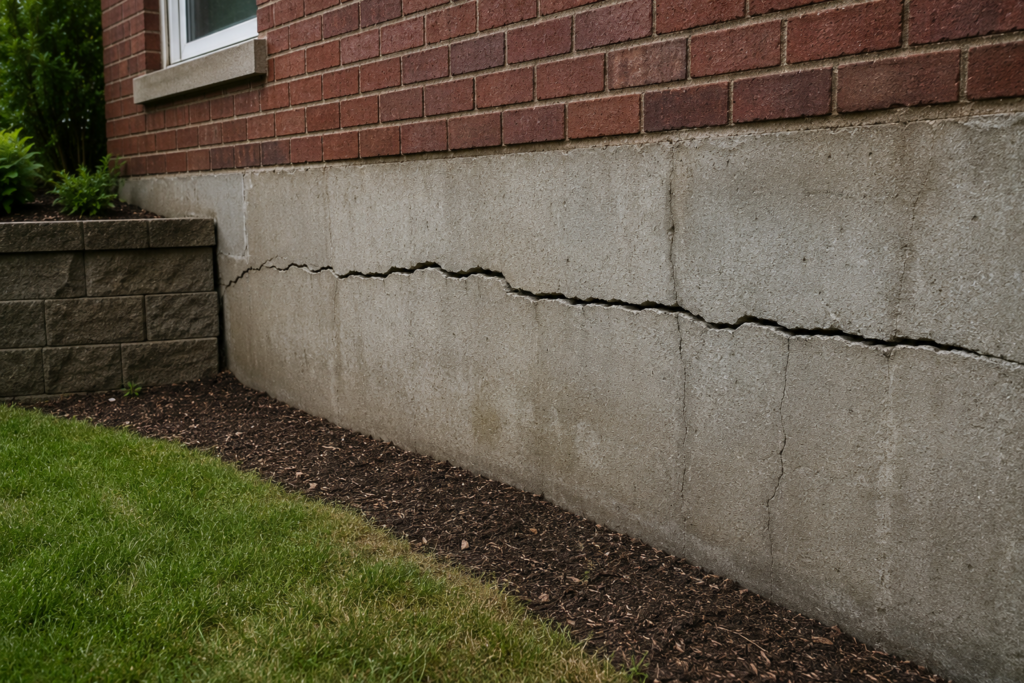
Some of the clearest Masonry Damage evidence is not on the brick at all. Your foundation moves, and your house reports it in ways you feel every day.
Interior signs worth noticing:
- Doors and windows that stick or swing open on their own
- New drywall cracks radiating out of door and window corners
- Floors that feel out of level or bouncy in one area
- Gaps opening between baseboards and the floor
- Musty smells in the basement or a persistent damp patch on a wall
Outside, look for horizontal cracks in the foundation wall. Vertical and diagonal foundation cracks are common and often manageable. Horizontal cracks mean soil pressure is pushing inward, and those need a professional opinion quickly.
Retaining walls deserve the same look. A retaining wall holding back soil is under constant load, and when the drainage behind it clogs, the wall starts tipping forward long before it fails outright.
Repointing, Tuckpointing, or Full Restoration? Know What You Are Being Quoted
Masonry vocabulary trips up a lot of homeowners, and it matters when you compare quotes. Here is a plain-language breakdown.
| Service | What actually happens | Right choice when | Typical scope | Relative cost |
| Repointing | Old mortar is ground out and fresh mortar packed into the joints | Mortar is soft or receding but bricks are sound | Section of a wall, 1 to 3 days | $ |
| Tuckpointing | Repointing plus a contrasting fine line worked into the joint for a crisp finish | You want the appearance restored along with the joint | Similar to repointing, more labour | $$ |
| Brick Replacement | Damaged units are cut out and matched replacements set in | Individual bricks are spalled, cracked through, or loose | Localised, 1 to 2 days | $$ |
| Rebuild | A wall section is taken down and laid again | Bulging, leaning, or widespread failure | 3 days to 2 weeks | $$$ |
| Masonry Restoration | Full assessment, cleaning, repair, and Waterproofing across the structure | Heritage stonework or long-neglected buildings | Weeks, often phased | $$$$ |
One warning. Repointing with the wrong mortar mix does more harm than doing nothing. Older homes were built with soft lime mortar, and packing modern hard Portland cement into those joints traps moisture and destroys the brick around it. Any masonry contractor working on a pre-1940 house should raise this before you do.
The Brick Industry Association publishes free technical notes on mortar selection and moisture control that are worth a read if you like knowing what you are paying for.
When Should You Call a Masonry Contractor?
Some things are fine to watch. Some are not.
Book a Masonry Inspection soon if you see:
- Stair-step cracking wider than a nickel
- Any bulge or lean in a wall
- Loose bricks anywhere above head height
- A chimney pulling away at the roofline
- Horizontal foundation cracks
- Efflorescence returning after cleaning
Call immediately if you see:
- Bricks that have already fallen
- A retaining wall visibly tipping
- Interior wall cracks that widen week over week
Good local masonry contractors will walk the property, photograph the problem areas, and explain what is urgent versus what can wait a season. Ask for references on Residential Masonry work specifically, since Commercial Masonry experience does not always translate to a century-old brick home. The Mason Contractors Association of America is a useful starting point for checking credentials in your area.
Masonry Maintenance Habits That Add Decades
Most Masonry Repair bills trace back to something simple that went unattended. These habits cost almost nothing and prevent a lot.
- Clean your gutters twice a year. Overflowing gutters dump water directly down brick walls, and that is the single biggest cause of Weather Damage on residential brickwork.
- Keep downspouts running well away from the house. Six feet minimum, further on clay soil.
- Slope the soil away from your foundation. A gentle grade over the first two metres does more than any product you can buy.
- Leave weep holes alone. Those small gaps in the bottom course are drainage, not defects. Never caulk them shut.
- Cut back ivy and shrubs. Climbing plants hold moisture against the wall and their roots work into mortar joints.
- Skip the sealant unless a mason recommends it. Non-breathable coatings trap water inside the wall and cause the damage they were sold to prevent.
- Walk your walls each spring. Ten minutes after the last frost, checking joints, corners, and the chimney.
Mark those spring walkarounds in your calendar and treat them as your yearly masonry milestones. Homeowners who track small changes catch problems while a mason still calls them minor. Guidance on drainage and moisture management around the home is also available through the US Department of Energy.
Your Brick Is Talking. Answer It Early.
Rick got lucky. His Efflorescence, soft mortar, and stair-step crack all traced back to one clogged downspout dumping water against the same corner every storm. A day of drainage work, two days of repointing, and the wall has been quiet ever since.
Had he waited two more winters, that same corner would have needed a rebuild.
Masonry is patient. It gives you years of small hints before it gives you a real problem. Powdery joints, a chalky streak, a brick that rocks under your hand, a door that suddenly sticks in July. None of those are emergencies today. All of them are cheaper today than they will be next spring.
Take ten minutes this weekend and walk your property. Check the mortar with a key. Sight down your walls. Look up at the chimney. If anything on this list matches what you find, get a masonry contractor out for a proper Masonry Inspection while the repair is still measured in days instead of weeks.
Your house has been holding up its end for decades. Return the favour.