
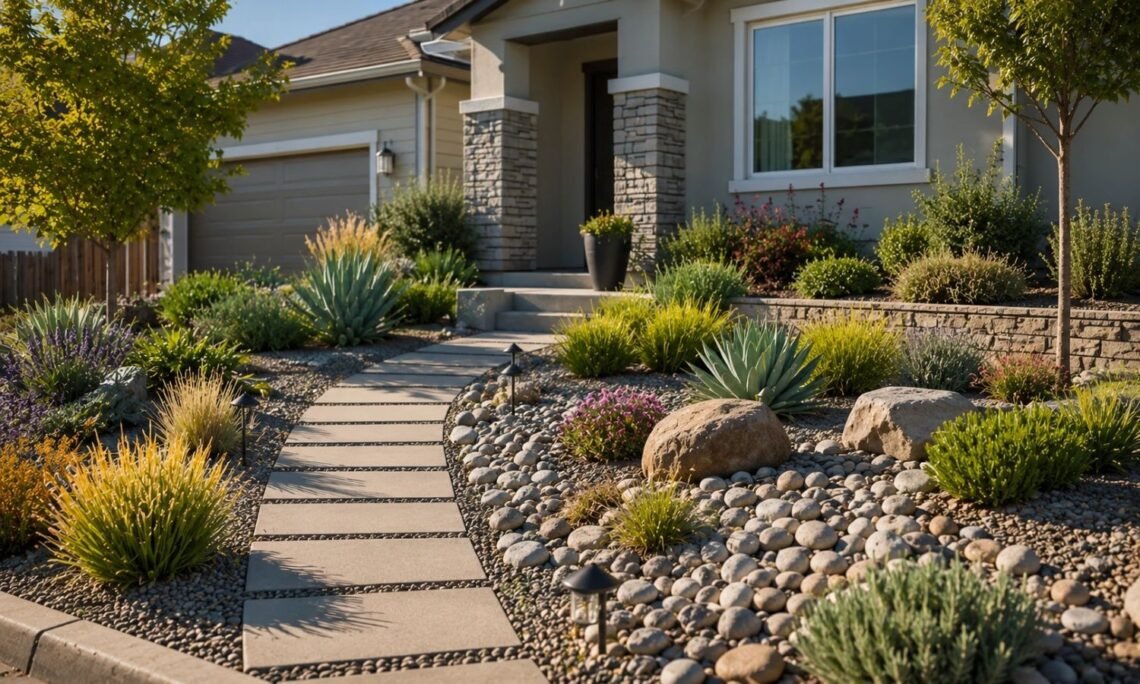
A low maintenance front yard is one where the plants, layout, and materials are chosen to need less regular work, not one that skips design or curb appeal. The right mix of drought-tolerant plants, simple hardscaping, and a basic watering system can cut weekly yard tasks down to almost nothing once everything is established.
This guide covers practical low maintenance landscaping ideas for any front yard, including plant selection, hardscaping materials, lawn alternatives, irrigation, and a season-by-season upkeep breakdown.
What “Low Maintenance” Actually Means in Landscaping
“Low maintenance” gets used loosely in landscaping, so it helps to define it clearly. A low maintenance front yard landscaping plan usually means:
- Fewer plants that need regular pruning or deadheading
- Less lawn area to mow, feed, and treat for pests
- Plants matched to your climate so they don’t struggle (and need constant babying)
- Irrigation that runs on its own schedule instead of a hose in your hand
- Hardscaping that never needs watering, mowing, or replanting at all
None of this means a boring or empty yard. It means picking the right combination of plants and materials so the yard mostly takes care of itself once it’s established. That’s the whole point behind good low maintenance landscaping ideas: less repeated labor, not less personality.
Start With Your Soil, Sun, and Climate Zone
Plant selection starts with soil, sun, and climate. Walking a front yard at a few different times of day shows which spots get full sun, which stay shaded under trees or the house, and where water tends to pool after rain.
The USDA Plant Hardiness Zone Map is another key reference point. A plant that thrives in one region can struggle or die back every winter in another, so checking the local zone before buying plants prevents having to replace dead plants every spring, a common problem in easy upkeep landscaping plans.
A basic soil test also helps. Sandy soil drains fast and dries out quickly, while clay-heavy soil holds water and can drown roots. Knowing the soil type narrows down which plants will settle in without extra intervention.
Native and Drought-Tolerant Plants That Do the Heavy Lifting
Native plants and drought-tolerant perennials form the base of most low maintenance landscaping ideas. Because they’re already suited to local rainfall and temperature swings, they need less water, less fertilizer, and less general maintenance once established.
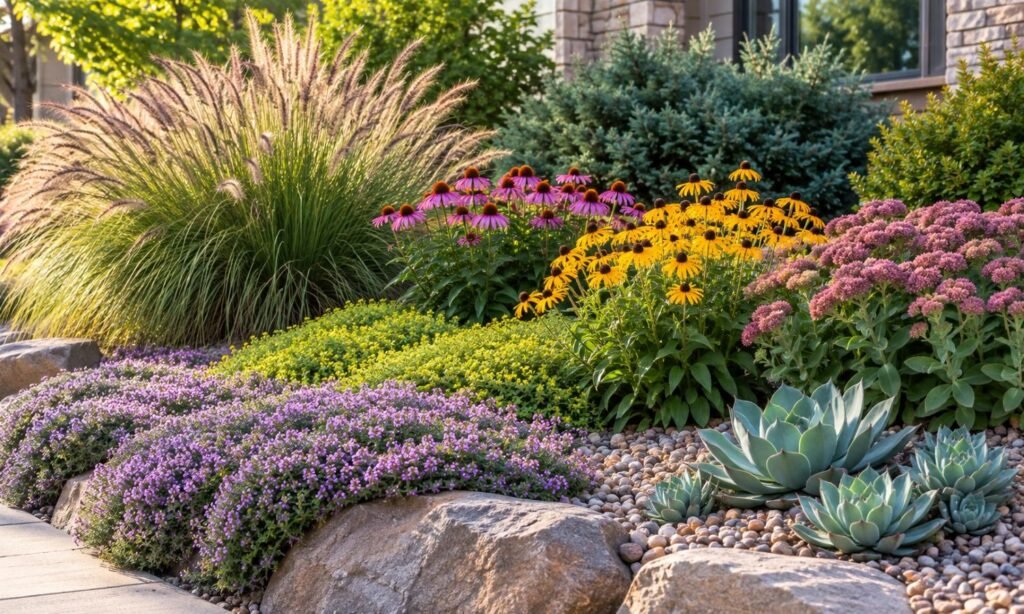
Easy-care picks include:
- Ornamental grasses like fountain grass or little bluestem
- Perennials such as coneflower, sedum, and black-eyed Susan
- Evergreen shrubs for year-round structure
- Ground cover plants like creeping thyme or sedum mats to fill bare patches
- Succulents in warmer, drier climates
Grouping plants by water needs, a practice known as hydrozoning, prevents overwatering hardy plants just to keep thirstier ones alive. Drought-tolerant plants work well grouped together in one bed, with anything that needs more moisture placed closer to downspouts or a shadier corner.
Native plants also support local pollinators and birds. The Colorado State University Extension’s pollinator habitat guide notes that native species have coevolved with local pollinators, meaning a low maintenance front yard landscaping plan can double as a small wildlife habitat with no added effort.
Hardscaping That Cuts Down Weekly Chores
Hardscaping, meaning the non-living parts of a yard, accounts for a large share of the real time savings in any low maintenance landscaping plan.
Materials That Hold Up on Their Own
- Gravel and river rock — suited to pathways, borders, or filling entire beds where plants aren’t wanted at all
- Pavers and flagstone — permanent walkways that never need mowing or edging
- Mulch beds — reduce weed growth and hold soil moisture around plants
- Decorative stone edging — keeps grass and gravel from creeping into each other’s space
A front yard combining a gravel bed, a paver path, and a few well-placed shrubs typically looks more intentional than one packed wall to wall with grass, and it requires a fraction of the upkeep. Mulch alone reduces weed control significantly, since it blocks sunlight from reaching weed seeds before they sprout.
Lawn Alternatives: Weighing Your Real Options
Grass isn’t the enemy, but a full lawn is usually the single highest-maintenance part of any yard. Mowing, watering, fertilizing, and dealing with brown patches adds up fast. Here’s how the most common lawn alternatives stack up.
| Option | Weekly Upkeep | Water Needs | Upfront Cost | Lifespan |
|---|---|---|---|---|
| Traditional grass lawn | High (mowing, edging) | High | Low | Ongoing yearly cost |
| Artificial turf | Very low (occasional rinse) | None | High | 15-20 years |
| Native ground cover/xeriscape | Low (light pruning) | Low, once established | Moderate | Long-term, self-spreading |
A full lawn replacement isn’t required to see a difference. Swapping even one section, like a strip along the sidewalk, into gravel or ground cover makes a noticeable dent in weekly upkeep.
Smart Watering: Drip Irrigation and Simple Schedules
Hand-watering is one of the biggest time sinks in yard care, and it’s also easy to get wrong. A basic drip irrigation system sends water straight to the roots on a timer, removing the need to stand outside with a hose.
The EPA WaterSense landscaping tips page notes that homes with automatic irrigation systems often use more water than homes without one, mainly because the schedule isn’t adjusted for the season. Setting the system for early morning watering, and checking it every few months as the weather shifts, keeps water use in check.
A full irrigation setup isn’t required to start. A simple soaker hose on a timer already beats hand-watering with a garden hose.
Seasonal Upkeep: What Little There Is Left to Do
Even a low maintenance yard needs some seasonal attention, though far less than a traditional lawn-heavy setup.
Spring
- Refresh mulch beds
- Check irrigation lines for winter damage
- Trim back any perennials left standing over winter
Summer
- Spot-check watering during heat waves
- Pull the occasional weed that pushes through mulch
Fall
- Cut back dead perennial growth
- Add a fresh layer of mulch before winter
Winter
- Mostly a rest period, especially for dormant native plants
This list is far shorter than what most traditional lawns require nearly every week from spring through fall.
Designing for Curb Appeal Without the Extra Work
A low maintenance yard doesn’t have to look plain. A few design choices support strong curb appeal without adding chores.
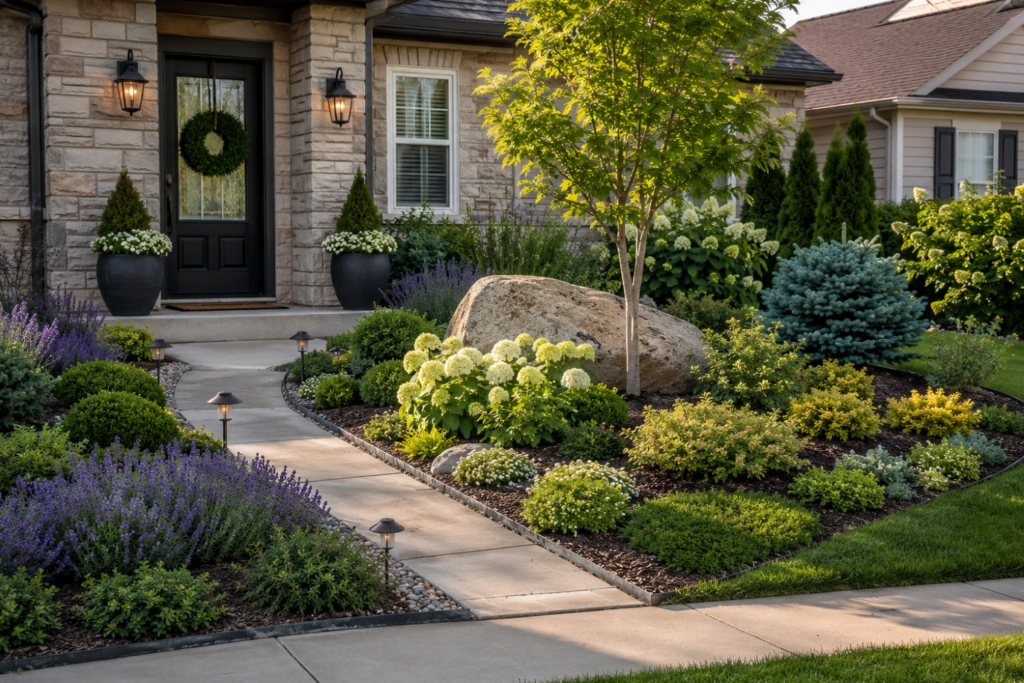
- One focal point — a small tree, a large boulder, or a statement shrub near the entry draws the eye without needing constant care
- Symmetry — matching plant groupings on either side of a walkway or door reads as polished with almost no extra maintenance
- Clean borders — simple edging between gravel, mulch, and any remaining grass keeps the yard looking tidy between touch-ups
- Layered heights — mixing low ground cover, mid-height shrubs, and one taller plant creates visual interest without a large planting list
Common Front Yard Sizes and What Works Best
Small front yards do well with a tight plant palette, maybe three or four species repeated in groups, paired with a gravel or paver path. Fewer varieties mean less to track and prune.
Larger front yards can handle more zones: a native plant bed near the porch, a gravel or turf strip along the driveway, and a mulched border along the property line. Breaking a big space into a few low-fuss zones keeps the whole thing manageable.
Summary
A full yard overhaul in one weekend isn’t necessary to see results. Start with one section, such as a patchy strip of grass near the sidewalk, and swap it for gravel and a few drought-tolerant perennials. Add a drip line to existing beds, and trade any high-maintenance shrub for a native option suited to the local hardiness zone.
Applied gradually across a few seasons, these low maintenance landscaping ideas reduce weekly yard work while keeping a front yard’s curb appeal intact, since the plants and materials used are matched to the local climate instead of working against it. For more garden and outdoor inspiration, browse the Garden & Outdoor section on Turner Home Decor.


One comment on “Low Maintenance Landscaping Ideas for Easy Upkeep in Any Front Yard”